Friday, June 07, 2019

A new (to me) crime reduction theory

Pretty interesting suggestion:
Lena Edlund, a Columbia University economist,  and Cecilia Machado, of the Getulio Vargas Foundation, lay out the data in a new National Bureau of Economic Research working paper. They estimate that the diffusion of phones could explain 19 to 29 percent of the decline in homicides seen from 1990 to 2000.

“The cellphones changed how drugs were dealt,” Edlund told me. In the ’80s, turf-based drug sales generated violence as gangs attacked and defended territory, and also allowed those who controlled the block to keep profits high.

The cellphone broke the link, the paper claims, between turf and selling drugs. “It’s not that people don’t sell or do drugs anymore,” Edlund explained to me, “but the relationship between that and violence is different.”
The rest of the article goes on to note how this is just one of many theories about the crime reduction in that period:
The University of New Haven criminologist Maria Tcherni-Buzzeo published a review of the contending theories in 2018 that found no fewer than 24 different explanations for why crime began a multi-decade decline in the early 1990s, through economic times good and bad, in different countries and cities, under draconian policing regimes and more progressive ones.
Go read the whole article, at The Atlantic.

David Roberts vents

David Roberts has an angry (but, I think, pretty accurate) twitter thread reaction to the apparent outbreak of hostilities between the Conservative religious culture warrior arm of the American Right and the libertarian-ish arm (now rebranded as "classical liberal", because they realised "libertarian" is too associated with nerds with such atrocious taste they can stomach Ayn Rand novels) which is not so keen on Donald Trump.

The hostilities are detailed in this article at Vox:  David French vs. Sohrab Ahmari and the battle dividing conservatives, explained

David's reaction culminates in this:


The topic of the inherent conflict between these two arms of the Right, and the ridiculous and harmful alliance they managed to forge on climate change science, is the defining story of the last 50 or so years of American politics.  

Thursday, June 06, 2019

Fake meat boom?

Axios reports that fake meat (or at least, fake burger meat) is proving to be so popular that the manufacturers are having trouble meeting demand:
The fake-meat boom is real, propelling startups to incredible heights while creating shortages of its own.
The big picture: The fake-meat market could be 10x its current size by 2029, Barclays analysts estimated in May.
  • "In fact, we believe that there is a bigger market opportunity for plant-based (and maybe even lab-based) protein than perhaps was argued for electric vehicles ten years ago."
Why it matters: The stock market in particular is treating Beyond Meat like a superstar, with its stock price up 4x from last month's IPO. But the companies must prove they can handle the demand.
  • "Last summer, locations of A&W Food Services of Canada Inc. were sold out of Beyond Meat’s burger for weeks," the WSJ notes.
  • "This spring, restaurants including American WildBurger locations around Chicago have run short of Impossible’s burgers. ... Craft & Crew Hospitality in Minneapolis hasn’t received scheduled shipments of Impossible burgers for weeks from a local distributor."
  • Both Impossible Foods and Beyond Meat have ramped up production to meet demand.
Cool.

Not to my taste, part 2

The Guardian has a lengthy article with the headline:


Seems family connections don't count for much in South Korea, then.  
In the past five years Australia has exported 158 racehorses to South Korea, mostly two-year-olds purchased in the Magic Millions sales for the purpose of racing or breeding. Analysis of a single year, 2014, shows that of 58 horses exported, 12 were confirmed to have been slaughtered and a further 11 were also likely to have been used in the meat trade.
That sounds odd.  Were these horses found to be duds one way or another, or do South Koreans like paying big dollars for well bred horse meat?

Anyway, as much as I don't care for horses as an animal, I find something more gruesome in the imagination about their slaughter for meat than the slaughter of smaller animals.  Maybe it's the idea of how much blood would be involved, or something.  

I haven't ever (knowingly) eaten horse meat, but I would decline if offered.

Not to my taste

NPR notes that there is another series of Black Mirror coming out.

I've only watched two episodes, including the movie length Bandersnatch, and I find I can't really warm to its bleakness.  (Even my son, who has watched more, doesn't seem to hold it in very high regard.)  

I have enjoyed Twilight Zone in its couple of incarnations, as well as the old Outer Limits, neither of which could be described as full of cheery optimism, but I find Black Mirror's modern version of worrying about where we're going unappealing.   Not entirely sure why.  Maybe because I find concerns about AI and computer technology generally overblown?   (Except for the problem of social media and misinformation - which is greatly underestimated.)

Heat deaths noted

I noted earlier in the week the extremely high temperatures in parts of India.  It's still continuing.

Pakistan has had them too - and it's hard to imagine in these countries how the poorest people survive.

In some pretty tragic news, even being in a hospital in Pakistan might not save you:
Dubai: In an incident which shocked the nation, at least five infants died of heat and suffocation after the air-conditioning units broke down at the intensive care unit in a hospital in Sahiwal, Pakistan.

Silence

I seem to be having an unusually long stretch without any comment from anyone , even Homer, despite posts on various (what I think are) interesting topics.

What's wrong, my extremely small readership?


A milestone reached (with some unpleasant associated news)

Yesterday was our 20th wedding anniversary.   My wife and I will eat out at the weekend, but last night we ate big at home and drank French champagne (which again made me note how I don't get any more enjoyment from them compared to the much cheaper Australian version).  Anyway, it was very pleasant.   We both consider ourselves lucky to have had children, making a start at it late in life, and having a boy and girl, both basically healthy and without significant drama in their lives, is something to be thankful for.

In the related unpleasant news, on Monday I learned that the priest who married us is now facing a historic sex abuse charge.   That's sad, whether it turns into a conviction or not.


Wednesday, June 05, 2019

Good to know I don't have to...

...become a vegan for climate change, according to Michael Mann:
Though many of these actions are worth taking, and colleagues and friends of ours are focused on them in good faith, a fixation on voluntary action alone takes the pressure off of the push for governmental policies to hold corporate polluters accountable. In fact, one recent study suggests that the emphasis on smaller personal actions can actually undermine support for the substantive climate policies needed.

This new obsession with personal action, though promoted by many with the best of intentions, plays into the hands of polluting interests by distracting us from the systemic changes that are needed.

There is no way to avert the climate crisis without keeping most of our coal, oil and gas in the ground, plain and simple. Because much of the carbon dioxide remains in the atmosphere for centuries, our choices in the next few years are crucial, and they will determine the lives our grandchildren and their grandchildren. We need corporate action, not virtue signaling. 

Massive changes to our national energy grid, a moratorium on new fossil fuel infrastructure and a carbon fee and dividend (that steeply ramps up) are just some examples of visionary policies that could make a difference. And right now, the "Green New Deal," support it or not, has encouraged a much needed, long overdue societal conversation about these and other options for averting climate catastrophe. 

But we need more than the left wing of the Democratic Party on board. We need a national plan of action that will include everyone.

Martin Wolf on China, Trump, trade

Interesting stuff at the Financial Times by Martin Wolf.  Highlights:
The disappearance of the Soviet Union left a big hole. The “war on terror” was an inadequate replacement. But China ticks all boxes. For the US, it can be the ideological, military and economic enemy many need. Here at last is a worthwhile opponent. That was the main conclusion I drew from this year’s Bilderberg meetings.

Across-the-board rivalry with China is becoming an organising principle of US economic, foreign and security policies. Whether it is Donald Trump’s organising principle is less important. The US president has the gut instincts of a nationalist and protectionist. Others provide both framework and details. The aim is US domination. The means is control over China, or separation from China.

Anybody who believes a rules-based multilateral order, our globalised economy, or even harmonious international relations, are likely to survive this conflict is deluded. The astonishing white paper on the trade conflict, published on Sunday by China, is proof. The — to me, depressing — fact is that on many points Chinese positions are right. The US focus on bilateral imbalances is economically illiterate. The view that theft of intellectual property has caused huge damage to the US is questionable. The proposition that China has grossly violated its commitments under its 2001 accession agreement to the World Trade Organization is hugely exaggerated.
And this:
This is the most important geopolitical development of our era. Not least, it will increasingly force everybody else to take sides or fight hard for neutrality. But it is not only important. It is dangerous. It risks turning a manageable, albeit vexed, relationship into all-embracing conflict, for no good reason.

China’s ideology is not a threat to liberal democracy in the way the Soviet Union’s was. Rightwing demagogues are far more dangerous. An effort to halt China’s economic and technological rise is almost certain to fail. Worse, it will foment deep hostility in the Chinese people. In the long run, the demands of an increasingly prosperous and well-educated people for control over their lives might still win out. But that is far less likely if China’s natural rise is threatened. Moreover, the rise of China is not an important cause of western malaise. That reflects far more the indifference and incompetence of domestic elites. What is seen as theft of intellectual property reflects, in large part, the inevitable attempt of a rising economy to master the technologies of the day. Above all, an attempt to preserve the domination of 4 per cent of humanity over the rest is illegitimate. 

Tuesday, June 04, 2019

Not such a dumb question

Just stumbled across something that removed some uncertainty I had since a teenager - I remember a fellow (female) student at high school mocking me about my admission that I was technically uncertain as to what constituted a eunuch of old.   What I meant was I was not sure if they were completely deprived of all genitalia, or simply testicles and scrotum.   (In fact, even the scrotal question was unclear, when I later read that the unfortunate boys destined to be European castrati simply had their testicles crushed by hand after soaking in some herbal mix with a hopefully anaesthetic effect.) 

It's something I don't think I have ever bothered looking up since then, but I stumbled across an article today from the Wellcome collection The castration effect, and it notes as follows:
Early Assyrian and Chinese civilisations transposed this knowledge to humans: boys born in poverty would be castrated and sent to work under the yoke of the state in the imperial household. (In China, both penis and testicles were removed – these ‘three treasures’ were pickled in a jar, brought out for special occasions, and buried with the eunuch.)
Well, I wonder on what special occasion a eunuch would bring out his pickled genitalia.  Birthdays, perhaps?    Anyway, it would seem the method used all depended on the time and place.

Someone (apparently a historian) at Reddit gives more detail:
Anyway, here’s Eunuchry 101. There are two basic types of eunuchs in history, “clean-cut” (no penis or testicles) or just a removal of the testes. A simple removal of the testes is historically the most common sort. There’s a third type where the penis was removed but the testicles left, but it’s only referenced in a few places for Islamic eunuchs and seems to have been a very limited thing, and there’s really no reason to do it like this other than punishment.

For clean-cut eunuchs there was basically only one method, cutting it all off in one go which I described for the Ottoman black eunuchs in that link, and here’s the Chinese version from G. C. Stent who is probably our most reliable Western reporter:
The interested reader can go to that link and read in detail the gruesome clean cut method used by the Chinese.   I wonder how many didn't survive it...


Christians against Modi

The Catholic Herald has quite a strongly worded piece saying that Christians in India are dismayed that Modi won the Indian election (and so convincingly).  The problem - his Hindutva support base:
The outcome of the elections is not good news for the country’s Christians. Although Christians comprise only 2.3 per cent of India’s population, they are known for running excellent schools and well-maintained hospitals. Anti-Christian sentiment is not a new phenomenon. Nevertheless, the situation has grown worse since the current ruling party’s rise to power in 2014.

In general, there are three primary means of exclusion under which religious minorities suffer in India today: social hostility, laws curbing religious freedom, and caste discrimination.

In a report published in 2018, the US based Pew research centre gave India the highest score for “social hostility” towards religious minorities, including Christians. This intolerance appears to be growing. The faith-based legal organization ADF India and the United Christian Forum run a helpline for victims of persecution. In the first quarter of 2019, there were more than 80 reported cases of mob violence against Christians. This means one violent attack almost every day, targeting priests, pastors, families, and whole church communities.

The aggression against minorities has been fuelled by the propaganda of the so-called Hindutva movement in the run-up to the elections. This movement seeks to purge India of everything non-Hindu and ultimately to build a Hindu nation with the BJP as its political arm. Needless to say, Christianity fits poorly into this nationalist concept.

Meanwhile, the Indian state of Uttarakhand introduced a new law last year ironically called the “Religious Freedom Act”. The BJP-led state is the 10th in India to introduce a so-called anti-conversion law. It is designed to prevent people from converting to religions other than Hinduism. One has to register with the authorities long in advance before being granted permission to accept another faith.

In the more radical versions of such laws, priests who want to baptise an adult and accept him into the Catholic Church also need to register.
Yes, it is worse than I realised....

The duck who was actually a imperialist capitalist running dog

Well, quite an entertaining explanation at The New Yorker about a book written in Chile (pre-Pinochet) that pointed out the capitalist faults of one Donald Duck.  The first paragraph:
In Santiago, Chile, in the early nineteen-seventies, the writer Ariel Dorfman served as a cultural adviser to the Chilean President, Salvador Allende. There was revolutionary fervor in the air, and Dorfman, as he wrote in his 1998 memoir, “Heading South, Looking North,” “felt the giddiness of those few great moments in your existence when you know that everything is possible.” He produced everything from poems and policy reports to children’s comics and radio jingles, “letting Spanish flow out of me as if I were a river.” His most enduring work from these years is a volume titled “How to Read Donald Duck: Imperialist Ideology in the Disney Comic,” co-authored with the Belgian sociologist Armand Mattelart. Among North American audiences, Disney was most famous for its films and theme parks, but, abroad, Disney comics had a robust readership, and legions of freelance artists tailored them—or rewrote them—to international tastes. In Chile, Donald Duck was by far the most popular Disney character. But Dorfman and Mattelart argued that Donald was a conservative mouthpiece, dampening the revolutionary spirit, fostering complacency, and softening the sins of colonialism. What kind of a role model was he, this eunuch duck, who sought only fame and fortune, who ignored the plight of the working class, who accepted endless suffering as his lot? “Reading Disney,” they wrote, “is like having one’s own exploited condition rammed with honey down one’s throat.”
Post-Pinochet, the book became targeted for burning:
“How to Read Donald Duck,” published in 1971, was an instant best-seller in Chile. But, in 1973, Augusto Pinochet seized power from Allende, in a violent military coup; under Pinochet’s rule, the book was banned, as an emblem of a fallen way of thought. Donald and Mickey Mouse became champions of the counter-revolution. One official pasted their faces on the walls of his office, where, under his predecessor, socialist slogans had once hung. Dorfman watched on TV as soldiers cast his book into a bonfire; the Navy confiscated some ten thousand copies and dumped them into the bay of Valparaíso. A motorist tried to plow him down in the street, shouting “Viva el Pato Donald!” Families of protesters swarmed his home, deploring his attack on their innocence while, less than innocently, they hurled rocks through the windows. In the fifties, Dorfman’s family had fled to Chile to escape an America gripped by McCarthyism; now he would return to the U.S. an exile from Chile. He wouldn’t go back for nearly two decades.
How odd.

Krugman on tariff history

An interesting column by Krugman comparing Trump's reckless use of tariffs as punishment to what went on in America post World War 1:

It is, I believe, pretty widely known that America turned its back on the world after World War I: refusing to join the League of Nations, slamming the doors shut on most immigration (fortunately a few years after my grandparents got here).
What’s less known, I suspect, is that America also took a sharply protectionist turn long before the infamous 1930 Smoot Hawley Act. In early 1921, Congress enacted the Emergency Tariff Act, soon followed by the Fordney-McCumber Tariff of 1922. These actions more than doubled average tariffs on dutiable imports. Like Trump, the advocates of these tariffs claimed that they would bring prosperity to all Americans.

They didn’t. There was indeed a manufacturing boom, driven not by tariffs but by new products like affordable cars and new technologies like the assembly line. Farmers, however, spent the 1920s suffering from low prices for their products and high prices for farm equipment, leading to a surge in foreclosures.

Part of the problem was that U.S. tariffs were met with retaliation; even before the Depression struck, the world was engaged in a gradually escalating trade war. Making things even worse, U.S. tariffs put our World War I allies in an impossible position: We expected them to repay their huge war debts, but our tariffs made it impossible for them to earn the dollars they needed to make those payments.

And the trade war/debt nexus created a climate of international distrust and bitterness that contributed to the economic and political crises of the 1930s. This experience had a profound effect on U.S. policy after World War II, which was based on the view that free trade and peace went hand in hand.
So am I saying that Trump is repeating the policy errors America made a century ago? No. This time it’s much worse.

After all, while Warren Harding wasn’t a very good president, he didn’t routinely abrogate international agreements in a fit of pique. While America in the 1920s failed to help build international institutions, it didn’t do a Trump and actively try to undermine them. And while U.S. leaders between the wars may have turned a blind eye to the rise of racist dictatorships, they generally didn’t praise those dictatorships and compare them favorably to democratic regimes.

There are, however, enough parallels between U.S. tariff policy in the 1920s and Trumpism today for us to have a pretty good picture of what happens when politicians think that tariffs are “beautiful.” And it’s ugly.


Heat news

Heatwave in India, waiting for the monsoon to arrive:


* Heat, not drought, will cause crop losses in America in future:
Climate change-induced heat stress will play a larger role than drought stress in reducing the yields of several major U.S. crops later this century, according to Cornell University researchers who weighed in on a high-stakes debate between crop experts and scientists.
* Record breaking heat in parts of American this last Memorial Day weekend:
The South was sweating through Memorial Day with temperatures hotter than an average summer day.
The region has been under a heat dome since Friday. That's when high pressure aloft acts like a lid trapping the heat below, setting the stage for potentially life-threatening conditions.
Some locations, such as Columbia, South Carolina and Augusta, Georgia, broke triple-digit temperature records Monday.

Conscience and evolution

A book review at Nature starts:
What is our conscience, and where does it come from? In her highly readable Conscience, the philosopher Patricia Churchland argues that “we would have no moral stance on anything unless we were social”.

That we have a conscience at all relates to how evolution has shaped our neurobiology for social living. Thus, we judge what is right or wrong using feelings that urge us in a general direction and judgement that shapes these urges into actions. Such judgement typically reflects “some standard of a group to which the individual feels attached”. This idea of conscience as a neurobiological capacity for internalizing social norms contrasts with strictly philosophical accounts of how and why we tell right from wrong.
It seems she is very even handed in her criticisms of moral philosophers, hating both Kant:
She eviscerates moral philosophers who believe that moral rules can be utterly divorced from biology and find a foundation based on reasoning alone. She points out that the assumption that morality is not properly philosophically grounded unless it is universal is itself merely a rebuttable stipulation. She notes that decades of attempts to define universal rules have not succeeded. And finally, she shows that most moral dilemmas are just that: dilemmas in which it is impossible to satisfy all the constraints, and which put ostensibly universal principles into conflict with each other.
but she's no fan of utilitarianism too:
Neither does she have much use for utilitarians, with their simple calculus of adding up the greatest good for the greatest number. She rightly points out that living in a utilitarian society would be unsatisfying for most people, because we are not partial to all members of our society equally. We prefer our own groups, our own friends, our own families. For most people, as she argues, “love for one’s family members is a colossal neurobiological and psychological fact that mere ideology cannot wish away”. She concludes that utilitarianism is irresolvably at odds with how our brains function, given that we evolved to care more deeply about people we know than about those whom we do not.
Could be a good read...

Monday, June 03, 2019

My harsh but fair assessment of the Federal election results


I see that the final seat tally is 77 Coalition, 68 Labor and 6 others (1 of which is Green).

That's a net gain to the Coalition of ONE seat since the last election.

What a trouncing, hey? 


Unusual tactics

The Sydney Morning Herald claims:
An explicit sex video allegedly involving a NSW player has been leaked as part of a plot to sabotage the Blues on the eve of the State of Origin series.
If there's 90 minutes of such material around, their use in lieu of the match broadcast might even drawn in big Victorian viewing numbers for a change. 

Einstein in the tropics

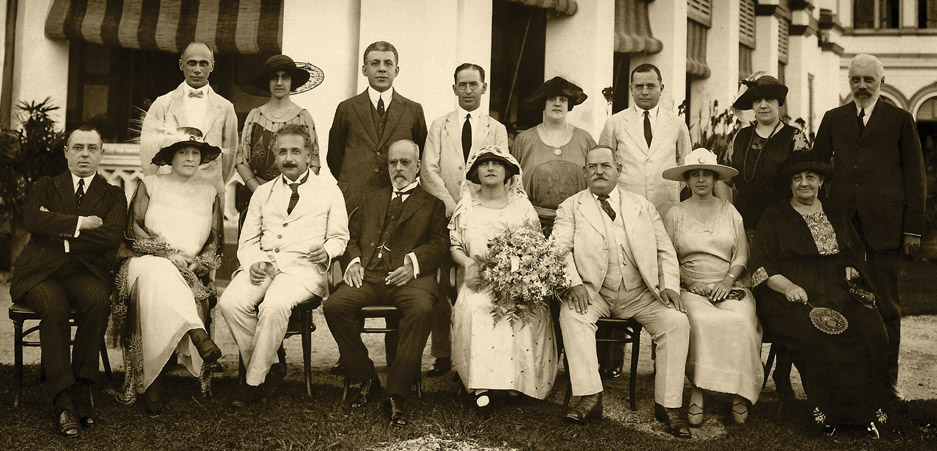
Yesterday I learned, via a documentary on Channel News Asia about Singaporean history, that Einstein had briefly stopped off there in 1922, on his way to Japan.   He met with prominent Singaporean Jews (there were about 623 there at the time - more than I would have expected) to ask for donations for the creation of a Hebrew University.   He was already famous at this time, but got his Nobel prize a week after the visit.

Here's a photo of his reception with his wealthy hosts:

 Looking at the photo, the thing that immediately strikes me is how overdressed everyone seems to be for the tropical heat and humidity of Singapore, pre-airconditioning.   Europeans in the tropics in those days were made of sturdy stuff...

Pig guilt

I saw on the ABC last week that some Chinese pig farms have taken to burying hundreds/thousands of pigs alive as a culling method to try to prevent the spread of African swine flu.  

Googling the topic, I see that video has also circulated late last year apparently showing pigs in a pit (live, the video says, although they don't move much) being set alight.  

As a person lately feeling twinges of guilt over eating mammals, this is not helping.

He's very strange

As with Trump, Duterte (the globe's other nutty, democratically elected but authoritarian inclined national leader) says so many oddball or  offensive things that they are barely registering with the public anymore.

Hence, I have not noticed much attention given to this: 
THE PRESIDENT of the Philippines told a crowd in Japan he used to be gay but was cured by 'beautiful women' – before inviting four women on stage to kiss him.

President Rodrigo Duterte, 74, began his speech on Thursday by telling the crowd his critic Senator Antonio Trillanes IV was 'similar' to him because they were both gay.

But, he said, he had actually been 'cured' by beautiful women and 'became a man again' when he married his first wife Elizabeth Zimmerman, according to CNN Philippines.
I guess that, like Trump, bragging about his sexual history with women is very important to him.  He just throws in additional details of a sex life we really don't need to know about.

100 ongoing jobs?

Apparently, a Senator last week said Adani would have 100 ongoing jobs (after the construction phase, which will provide all of 1,500 jobs.)

Read about the extremely rubbery Adani figures at this post.

Electromagnetic pulse and the Right

Slate notes that the possibility of an EMP attack on America (by a nuclear weapon or two being let of high above the country) has become a long standing obsession of the Right in particular, and asks why.

I hadn't realised the apparent partisanship of this concern before, but they make a good case.

In any event, as the article does admit, preparatory action to harden electrical networks against it are a good idea, given that it may help with unexpected things like another Carrington event from the Sun.

Tornadoes, hurricanes and climate change

The USA seems to be having a lot of problematic weather lately - floods and tornadoes mainly.

Roy Spencer has been going for years about how people are wrong to think that climate change is making tornadoes worse - he talks about the wind shear component that should decrease as the atmosphere warms.   And I see that he has another go this year at pooh-poohing the idea that this year's high number is due to climate change (at Fox News, of course.) 

But mainstream climate scientists think the story is more complicated, and suspect that climate change is having some effect on tornadoes - although they admit this is a very difficult thing to study given their nature.

Here's a balanced article about it:   Is climate change fuelling tornadoes?   Some climate scientists are quoted, and the conclusions are:
Many of them pointed out that it can be tough to detect tornado trends because comprehensive records only go back a few decades and there's a lot of variability in tornado activity year to year. But they said some shifts are starting to show: while tornado intensity doesn't appear to have changed, there are more days with multiple tornadoes now, and there may be a shift in which regions are especially prone to tornadoes.
Even if future storms in a higher temperature don't spawn more tornadoes, there will likely be more damaging severe storms anyway:
 More broadly, Brooks said, researchers are looking at severe storm development, because even without tornadoes, giant thunderstorms can produce damaging hail and destructive winds. There's a robust signal that global warming will make the atmosphere more likely to spawn such storms.
 And the wandering jet stream is not off the hook, too:
Prolonged tornado outbreaks also could potentially be linked with global warming through a jet stream pattern that is becoming more frequent and that keeps extreme weather patterns locked in place, Potsdam Institute for Climate Impact Research scientist Stefan Rahmstorf suggested on Twitter
Speaking of wind shear, I also see a recent paper on research indicating climate change may lead to more rapidly intensifying hurricanes (as well as wetter ones.)   

Friday, May 31, 2019

The irrational Delingpole

Professional Right wing denier of climate change Delingpole says that a dubious sounding treatment (regular massage of the limbic system) for a dubious diagnosis ("chronic" Lyme disease) has been making him act nutty:
If I’ve been incredibly rude to you or snappy or tearful lately, if I’ve taken offence where none was intended, or I’ve wildly overreacted to something you said on social media, I do apologise. It wasn’t the real me you experienced in those moments: it was the mad brain that sometimes seizes control of me.

The reason I have these episodes — as I keep having to explain to my bemused victims, after the event — is that I’m currently undergoing intensive medical treatment which gives me these weird and powerful mood swings.
But then, he talks about he's been borderline insane many times over many years:
Now that I’m on the healing path I’ve finally been able to take stock of my life and understand what a huge toll my Lyme years have exerted on me physically and mentally. There was a period — still too raw and horrible to talk about in detail — when I wonder whether I shouldn’t have been sectioned. Only recently, when I learnt that Lyme can cause psychosis and I looked up the symptoms, did I realise that this was what I probably had. I was in a dark and terrible place; I certainly wasn’t fit to make important decisions. God, if only I’d known what was happening to me, that it wasn’t my fault and that I needed help.
And gullible conservatives have found this guy's view on climate change convincing....

Hydrogen planes, not battery?

There's a start up planning on making a small, boxy commuter "flying car" powered by hydrogen fuel cells.   The mock up doesn't look all that inspiring (looks like a slightly bigger version of a passenger drone):


but what's said in the article about the energy density of fuel cells is interesting:
The argument for fuel cells boils down to energy density: One pound of compressed hydrogen contains over 200 times more energy than one pound of battery, says Alaka’i founder Brian Morrison. That means the Skai can meet the speed, range, and payload requirements that Alaka’i thinks will make it competitive, while saving a lot of weight—a top line consideration for anything that flies. Though the company won’t reveal specifics surrounding the power system, it suggests that it and its fuel cell provider (also not disclosed) have made “breakthroughs” with the technology that enable this performance.

Hydrogen fuel cells are proving themselves able to significantly boost run times for vehicle systems, with certain small unmanned aircraft jumping from 30- to 45-minute run times with batteries to more than two to four hours with fuel cells, says Thomas Valdez, a chemical engineer with Teledyne Energy Systems. And they offer a safety benefit by eliminating the risk of thermal runaway. Even a punctured tank is no big deal: “Pressurized hydrogen would very quickly dissipate in the air, so it won’t pool or catch fire the way conventional fuels do,” Valdez says.
I would still think a pressured hydrogen tank would be the safest thing in a crash.   But nor is normal aviation fuel, of course.

Anyway, one way or another, it seems our future cities will look a bit Blade Runner-ish.

Excellent sarcasm, Ben


How to keep poor people from fleeing poverty - make them poorer

I haven't bothered yet looking at the twitter reaction to Trump's plan to put tariffs on Mexico that will rapidly rise to 25% unless Mexico stops illegal immigration.

But surely someone had already said it - isn't a bit perverse to seek to keep poor people in Mexico by helping ensure their country gets poorer via punitive trade tariffs?  


A blockchain fail

I trust the wonderful world of blockchain conferencing and waffle-ful papers is still being enjoyed by Sinclair Davidson and Chris Berg?   At least it gets them out of Australia and their other pet project of trying to drum up support within the Liberals for ending funding of the ABC, so I don't mind them wasting their time overseas, really.

Anyway, I post about it again because it seems that if the German banks have much say in it, blockchain technology doesn't have a bright looking future:
A trial project using blockchain to transfer and settle securities and cash proved more costly and less speedy than the traditional way, Germany’s central bank president said.

The experiment, launched by the Bundesbank together with Deutsche Boerse in 2016, concluded late last year that the prototype “in principle fulfilled all basic regulatory features for financial transactions.” Yet while advocates of distributed ledger technology say it has the potential to be cheaper and faster than current settlement mechanisms, Jens Weidmann said the Bundesbank project did not bear those out.

Still no cold fusion

So Google has been looking into cold fusion again since 2015, but come up with no good news. 

Nature notes, surprisingly, that it is not definitely the end of the line for the possibility of cold fusion:
Is that the final nail in the cold-fusion coffin? Not quite. The group was unable to attain the material conditions speculated to be most conducive to cold fusion. Indeed, it seems extremely difficult to do so using current experimental set-ups — although the team hasn’t excluded such a possibility. So the fusion trail, although cooling, is not yet cold, leaving a few straws for optimists to clutch on to.
It's pretty remarkable that it is proving so hard to write this field off entirely.

Trump's "friend" misbehaving, again

Well, can Trump find a way to forgive his "friend" for some more friendship challenging behaviour?  
North Korea has executed its special envoy to the United States as well as foreign ministry officials who carried out working-level negotiations for the second summit with Donald Trump in February, holding them responsible for its collapse, South Korean reports say.

Thursday, May 30, 2019

In which renewable energy saves the world (without that much storage)

If this latest idea is right, it suggests that renewables are more capable of saving the world than I had realised.  

An article at The Conversation argues that their modelling indicates that, rather than worry about building a lot of storage for renewables, just build with a big enough over-capacity instead, and don't use the excess when it's produced.   Sounds questionable, but then again, who knew that adding a metre to an equator-covering rope would raise it 13 cm around the whole world? Not me, so I'm not relying on intuition ever again, or at least, until it suits me.

I would have thought the overcapacity would have to be spread out a fair bit, but they don't even seem to be arguing that.  For example:
A legitimate question to ask is what would be the area required for a full deployment of oversized solar PV. For Minnesota, in the most extreme 100% PV generation scenario assuming oversizing by a factor of two – or doubling the solar needed to meet current demand – this area would amount to 435 square miles, assuming solar panels with state-of-the-art efficiency of 20%. This area represents less than 1% of the state’s cultivated crops and half of the high- and medium-density urbanized space.
Again - sounds a touch too good to be true, but, you know, that rope thing is starting to make me believe anything.

Anyway, let's go back to some of my earlier ideas about how to get along with more solar.  Because if you are going to build to overcapacity, you are going to be wanting to install a lot of extra solar compared to what we have now, and in some places, do you really want to cover up good land with panels?   So:

*  Remember my previous posts about floating solar on water?   Specifically, there seems to be no good reason not to cover large parts of water storage dams (such as Brisbane's Wivenhoe and Somerset dams) with solar panels on plastic floats.   I doubt that they represent any real pollution risk to drinking water, and plastic floats are surely pretty cheap.   Less evaporation from the dams too.

Why is no one in Australia listening to what is a patently good idea??

Remember - I also argued for Snowy 2 to use floating solar panels to pump storage water.  (Although maybe wind there is a better bet?)

* I also have posted before about compulsory State government building codes requiring a minimum amount of solar power and storage - why wouldn't that be a good idea in most of Australia?

In fact, I see that the Greens have adopted such a policy.

And it has now been adopted in California.

This could only help with the "build to overcapacity" idea too, surely?

* If you have to build large solar farms in the country side, I've also posted before (in 2015) about raising them above the ground and spreading them out enough to still be able to use the land underneath for farming or grazing.

* Not sure that I have ever posted about it before, but if you are going to spread out large solar power farms (say, in the middle of Australia where the land is not productive), then you need a good electricity network that is going to reduce losses over transmission distance.  High Voltage Direct Current cables have long been mooted as good for that, but their advance seems to be happening pretty slowly.

Gosh, look at the photo at that link for some real oversized gear.   I'll throw it in here because it reminds me of the ridiculous oversized equipment on Forbidden Planet:


And in conclusion:

With this latest idea, combined with what I've been suggesting over the last few years, it seems I've pretty much solved the world's renewable energy problems, if only people would listen to me!


Thank you.

PS:  I see that a Bill Gates clip from last year of him making a cranky sounding statement that people were kidding themselves if renewables and storage could power the world is doing the rounds.   I suspect he just has settled on nuclear as being essential and won't be budged.   And didn't he mention steel making?

Well, why doesn't he look harder into proposals to make steel either with no coal at all (see Sweden), or even the CSIRO's proposal to make it with biochar as a way to cut down the CO2 by a large amount.

I can envisage some places where renewables are difficult to use on large enough scale (that Russian city in the Arctic circle during winter, for one!).  But just because Bill Gates has what sounds like a sensible hunch, it doesn't always pan out.   Has his "condom of the future" competition had any dramatic effects, for example?  Not that I know of...

More health problems with e-cigarettes

Vox has a good summary about the health issues, although it doesn't mention the unusual one that I noted before but doesn't seem to have attracted much attention (about lead coming from the heating element of some brands):

Vaping may be more dangerous than we realized

Sinclair Davidson meanwhile is still posting pro-vaping stuff at Catallaxy.  I wonder if he vapes.  Could explain a lot.

If only Rupert Murdoch would take it up - I'd be all for that.  I'd also be happy for him to develop a late age interest in hiking Mount Everest.  

The dubious Ita

Look, Ita Buttrose had an affair with lumpy, married boss Kerry Packer - why should I trust her judgement on anything else after that?

Her comments about the ABC yesterday were somewhat worryingly vague, even muttering about unconscious bias and "more diversity of views".   (Show us the Right wing commentators with talent as broadcasters, Ita - if Sky News at Night and talk back radio are any guide, they don't exist.   Or if one wants to argue (ridiculously) that Alan Jones has obvious talent because look at his audience numbers - well, as if he is going to take a pay cut to work at the ABC.)

She was appointed by Morrison and a government that still had members who spend every waking moment unhappy that the ABC does not have hosts who agree with them.   And the Murdoch press is running a "must further defund the ABC/SBS" campaign in The Australian already, as if the motivation for that is not glaringly obvious.

I don't think Ita is going to be good in the job, somehow.

Another American peculiarity

Emotional support animals on airplanes, I mean.  Has any other country got suckered into this to anything like the Americans?   I mention them because of this remarkable story in the Washington Post:
An attack on a plane by a fellow passenger’s emotional-support dog left Marlin Jackson needing 28 stitches, according to a negligence lawsuit filed Friday against Delta Air Lines and the dog’s owner. In the suit, Jackson claims he bled so badly that a row of seats later had to be removed from the plane.

Jackson had just taken his window seat in the 31st row for a June 2017 flight from Atlanta to San Diego when the dog, sitting on the lap of the passenger next to him, lunged for his face, pinning him against the window of the plane so he couldn’t escape, the lawsuit alleges....

Before he took his seat, Jackson asked Mundy if the reportedly 50-pound dog — a “chocolate lab-pointer mix,” according to the Atlanta Journal Constitution — would bite, and the dog owner said Jackson would be safe.

“While Mr. Jackson was securing his seatbelt, the animal began to growl at Mr. Jackson and shift in Defendant Mundy’s lap,” the lawsuit reads. “Suddenly, the animal attacked Mr. Jackson’s face, biting Mr. Jackson several times. … The attack was briefly interrupted when the animal was pulled away from Mr. Jackson. However, the animal broke free and again mauled Mr. Jackson’s face.”

Massey said teeth punctured through Jackson’s gum, above his lip and beneath his nose. He has suffered permanent scarring, the complaint says, and his attorney said he still experiences numbness in the area, and has intermittent speech issues.
This has not been the only time one of these dogs has bitten, apparently: 
The alleged attack is one of numerous reports in the past few years of emotional-support animals causing trouble for airline passengers, incidents that have pushed airlines to crack down on which animals they allow on planes.

In the months following the attack, Delta tightened rules around emotional-support and service animals. The airline required passengers beginning in March 2018 to provide “confirmation of animal training,” proof of the animal’s immunization records as well as a letter from a doctor or licensed mental health professional regarding the request for the support animal.

When Delta announced the change, it cited an 84 percent spike in reported animal incidents since 2016 “including urination/defecation, biting” and the incident involving Jackson.


Wednesday, May 29, 2019

No laughing matter

In one of their ongoing highlights of ridiculous American hospital charges, NPR has the story of a woman (a midwife, no less) who had a pretty normal birth, and got a charge on her hospital bill for nearly $5,000 for having used nitrous oxide (laughing gas) for pain relief during the birth.

All very ridiculous (and the charge was revised down, when challenged, to around $500), but I was more interested in the fact that the gas is only coming into common use in birthing in the US recently.

My wife used it when (trying to) give birth to our son, now 19 years ago.  It seemed simple, safe and helpful.  But here's the story from the US:
Part of that problem comes down to the recent resurgence of the practice in the United States. In 2011, two hospitals in the U.S. offered nitrous oxide for childbirth. Now an estimated 1,000 hospitals and 300 birthing centers provide it, said Michelle Collins, a professor and director of nurse midwifery at Vanderbilt University School of Nursing.

The use of nitrous oxide has long been common during childbirth in the United Kingdom and Canada, in part because of its low cost. Many people in the U.S. have learned about the practice while watching the popular British period drama Call the Midwife, set in the 1950s. Epidural anesthesia largely displaced nitrous oxide in the U.S. in the 1970s.
Hmm.   Moved from a cheap, self administered, form of pain reduction to a highly medicalised one that removes all pain (if done properly) but also carries (I think) a very small risk of serious complication?

Is there something culture specific about the degree to which Americans seem to want to go to avoid even the hint of pain?   I mean, why hasn't the prescribed opioid problem been replicated in other countries?   Is it innate, or a result of what strong capitalism in medical practice pushes people to expect in their (the doctors') own self interest?   I mean, even the way medicines are advertised there just seems so odd to Australians.   (Mind you, I recently heard a breast enlargement ad here on FM radio recently - if I were able to ban that I would.)

I may have mentioned before, but I suspect Japan might be at the other extreme of expectation of tolerance of discomfort (or used to be, at least) as I was told by a specialist there some years ago that he did gastro-endoscopy, and without any form of anaesthesia at all.   But then again, I think Japanese women get to stay in hospital for days after birth.  Here, I just heard of a young woman who had a two hour labour, gave birth at 2am and was discharged at 9am (!)  (But there were midwife visits at home daily for the next week or so.)

Anyway, I still think Americans are a bit odd with the pain issue.

Straight talking from James Comey

I like the way James Comey speaks bluntly in his Washington Post column:
It is tempting for normal people to ignore our president when he starts ranting about treason and corruption at the FBI. I understand the temptation. I’m the object of many of his rants, and even I try to ignore him.

But we shouldn’t, because millions of good people believe what a president of the United States says. In normal times, that’s healthy. But not now, when the president is a liar who doesn’t care what damage he does to vital institutions. We must call out his lies that the FBI was corrupt and committed treason, that we spied on the Trump campaign and tried to defeat Donald Trump. We must constantly return to the stubborn facts.
The rest of his article explains, again, why it is absolute nonsense being peddled by the conspiracy loving Right (facilitated in large part by the massive propaganda campaign of Murdoch's Fox News) to be calling it a "treason" or a "coup".
 

Upper class twit spotted on Twitter


Tuesday, May 28, 2019

I think Gillette is just trolling conservatives now

Has Twitter exploded about this yet?:
A new ad campaign from Procter & Gamble-owned razor brand Gillette features a father teaching his transgender son how to shave for the first time.

The video shows Samson Bonkeabantu Brown, a Toronto-based artist, opening up about his first experience shaving with his father since his transition.

Wittgenstein's rope

I don't remember hearing of this before.   It's a very surprising bit of maths.  Apparently, Wittgenstein used it as an example of how wrong our intuition can be.

Add a metre to an Earth equator spanning rope and how high does it raise it off the ground?

Watch the 6 minute video to find out.

Update:  for those who can't watch a video, here is an explanation from a book footnote.  For a yard of extra rope, it's nearly 6 inches:


So for a metre, it's going to be something similar.  Enough to trip over for the entire length of the equator. 
 
I'm still having trouble getting my brain to accept this...

I don't think Tim will pay for a copy of this cartoon

In an article in The Australian, about Tim Wilson's (and David Sharma's) failure to get cabinet spots despite (in Timbo's case) his PR campaign on franking credits, is accompanied by this cartoon:


That's a really bad attempt at a likeness of Wilson.   It makes him look about 60 and super jowly while still missing the dark circles under his eyes.  Tim's probably ordering a copy to burn as I write.


China and greening

Not sure I find this article very convincing, but it's of interest nonetheless:

China succeeds in greening its economy not because, but in spite of, its authoritarian government 

There are some sceptical comments following it too: some pro-nuclear, some with a soft denier air about them.    

A credible figure

The Washington Post did a weird weekend profile of self-hyping George Papadopolous, who claims Alexander Downer recorded him on his phone and was acting not as a dipolmat but as a spy for the Deep State that was determined to sink Donald Trump's candidacy.  He looks a very believable character:


He's also only 31.

Monday, May 27, 2019

Yet more NYT reporting on those Navy UFOs

Look, it's a pretty intriguing read, and who doesn't love a good UFO mystery;  but to me there are aspects of this story that still have an air of "too good to be true" about them.

It sounds like the two ex Navy personnel invovled appear a new TV show about it, so I would like to see how they come across in interviews.

One of the problems I have is that these remarkable sightings were not leaked by anyone for about 4 years.

I would love to know more, though...


Glass overboard in the 1970's

First, a memory:   in about 1974 or 1975, I had my first weekend on the rather decrepit Navy Reserve training vessel TV Gayundah,  being a good little Navy Cadet on a first time experience of seeing Moreton Bay and pretending to be a sailor.   I remember it had anchored off Moreton Island, at night, and it was a pretty impressive sight getting up in the morning and seeing the blue, clear water and the long, pretty pristine looking island close by.  (It had not, at that time, yet been overrun by 4WD on the beach.)  The vessel itself was a converted "Motor Refrigeration Lighter", and the sleeping quarters were in what used to be the refrigerated hold.   It was pretty cramped, old and smelly, but it had a certain old world appeal.   I have found a photo on the 'net:


(Gosh, I must seem old for having been on that...)

That night, people were having soft drinks (or beers?) on deck, and at one point a kindly navy cadet officer (a school teacher in real life) called out to everyone that he had seen glass bottles floating in the water, apparently from our little ship, and he told us to be more considerate and don't throw bottles overboard.  True, this may have been because we were near the island and our bottles could easily have ended up there:  but still, I think that, in principle, he was sensible enough to feel throwing rubbish overboard was not appropriate.

Fast forward to 2019, and this is what twit Patrick Moore says he was doing, around the same time as my experience,  when he was doodling around the oceans with Greenpeace:


That sounds..really pathetic.


Interesting results


I wonder - would anyone who really preferred to remain have still voted Labour?  It did have a remain faction of politicians, didn't it? 

To really provide a definitive resolution as to what should happen according to public opinion, wouldn't you need a referendum with three choices (hard, soft, or no exit), and with some form of preferential voting? 

Australia is much more sensible this way.

Heatwave in May in Japan

Some extraordinarily high temperatures being experienced in Japan this May, particularly in the normally cooler Hokkaido:
Two die, nearly 600 taken to hospitals nationwide as heat wave hits parts of nation Unseasonably hot conditions gripped wide areas of Japan on Sunday, with the town of Saroma in Hokkaido setting the highest temperature ever recorded in the country for the month of May.

Two men — one in Shimizu, Hokkaido, and the other in Tome, Miyagi Prefecture — died and at least 575 people nationwide were taken to hospitals by ambulance suffering from symptoms that appeared to point to heatstroke, according to data compiled by Kyodo News.

The mercury hit 39.5 degrees in the northeastern coastal Hokkaido town at 2:07 p.m. Sunday — the hottest at any observation point in Japan for the month, according to the Meteorological Agency. The previous record, set on May 13, 1993, was 37.2 degrees in Chichibu, Saitama Prefecture.
But Australian libertarians and tax haters just had a weekend conference with "star" Australian denier Jonova giving a talk.

Why are libertarians such numbskulls on this matter?

Hindu nationalism

This does seem a really good explanation about how Hindu nationalism has evolved (and why Modi is a worry.)  It starts:
The city of Varanasi is the holiest site in the Hindu faith. It is also, not coincidentally, the parliamentary constituency of Modi, who has just won a second five-year term. He did it, in large measure, by emphasizing Hindutva, an ideology that seeks to reformulate Hinduism into something that most practitioners’ grandparents would barely understand.

And then the key paragraphs:
The term Hindutva can be (sort of) translated as “Hindu-ness,” and that gets (sort of) at what it’s all about: Hinduism not a theology, but an identity. The movement’s intellectual father, Veer Savarkar, wrote its foundational text (helpfully titled Hindutva) a century ago. At the time, the notion of a unified faith or doctrine, let alone a shared identity, would have left most Hindus simply confused: Identity was determined by a person’s family, village, caste. The very term Hindu is merely a loanword (most likely from Persian), referring to “the people who live across the Indus River.” Until the 20th century, most Hindus had never felt the need to describe themselves in any comprehensive way.

It was the colonial experience that created Hindutva: Why, Savarkar and his comrades wondered, had India been dominated for centuries by a relatively small number of Muslim Mughals and Christian British? Was monotheism simply better suited for ruling? If so, what did that mean for a faith with more deities than days in the year? During the founding decades of the Hindutva movement, much effort revolved around making Hinduism more like its rivals: building a single shared identity to unite everyone for whom India was, in Savarkar’s words, “his Fatherland as well as his Holy-land.” This definition conveniently roped in Sikhs (a disproportionate number of whom served in the army), Buddhists (whose spiritual cachet helped give the movement credibility), and Jains (who tended, then and now, to be quite rich).

What it pointedly did not do was dictate what this newly lumped-together group of people should believe. Indeed, very few of Hindutva’s leading lights have been holy men, or even particularly devout; Savarkar and K. B. Hedgewar (the founder of the Rashtriya Swayamsevak Sangh, or RSS—the primary vehicle for Hindutva mobilization) are both described as having been atheists or agnostics. The point wasn’t doctrine, but branding.
So, it's identity politics that have taken over. 

The problems with mass migration to space

The Guardian has an opinion piece up expressing scepticism about the likes of Jeff Bezos's dreams of O'Neill style massive space colonies and colonisation of Mars.   It's not at all detailed, though, on the technical issues:  it more looks at the changing motivation for space colonisation, and notes that it is pretty much now advocated out of environmental concern.

I don't think the change in motivation makes much sense, though.

As I recall (and I am not going to bother searching for confirmation just at the moment), the issues that killed off O'Neill style colonies from popular consideration were:

a. more careful engineering consideration which indicated that the structural stresses on spinning such massive objects to get any decent form of artificial gravity were much higher than initially realised, and pretty much impractical using the initially assumed materials;

b. the number of rocket launches required to put so much equipment in orbit (even assuming using a slingshot on the moon to get raw materials into a processing facility) was going to put an awful lot of pollutants into the upper atmosphere, with possibly deleterioius atmospheric effects;

c. the new technology involved for orbital processing of lunar soil is completely untested and getting that alone to work is surely going to be a big enough task in itself.

As far as point b is concerned,  I seem to recall O'Neill addressed that himself when he was alive, and argued it wasn't that many launches.   But the Falcon Heavy rocket from Space X does use kerosene and liquid oxygen, and it will be putting a significant amount of CO2 into the atmosphere.  Not sure how much compared to other things, but it is ironic that in order to escape a greehouse Earth, some now propose adding to the problem on the way out.

I don't know if point a has been reconsidered - but I suspect that it is still a very real problem.  It might be able to be addressed by using strong materials you can make on Earth, but O'Neill colonies were supposed to be made from pretty basic materials and I find it hard to envisage making more than pretty basic metals in orbit from Moon dirt.  It's yet another technological hurtle that would be ridiculously hard to overcome without launching, in pieces, manufacturing equipment made on Earth.

I see that Bezos went to Princeton when O'Neill was there - hence he caught the O'Neill dream early on.

But really, I would have to hear how he thinks the problems I listed above are supposed to be addressed before I consider it as having any real credibility.

The thing is, the problem with greenhouse gases was barely a thing when O'Neill was writing his book in the mid-1970's.  More general concerns about industrial pollution were one of the motivations for talking about moving off planet.   But now that the AGW problem has been fully realised, dreams of a "let's just move into space" solution (apart from the possibility of microwave power from orbiting solar power satelittes) just seem a fanciful and wasteful idea compared to putting a lot of technological effort into clean energy on Earth.  

(Having said that, I still think having a smallish, permanent base on the moon to act as a "lifeboat" for Earth is a good idea.   And it is so much simpler to get stuff there and back than from Mars.  Once you learn how to run a viable colony there, then you might think about going to Mars.)


A handy reproduction chart

I don't think I can copy and paste it here, but Axios has a nice interactive graph showing the national reproduction rates around the world. 

Basically, poor African nations are still having babies at a very high rate - but China, the rest of East Asia, the US and Europe are not having enough to replace population.  India's rate is not so high now either.

Sunday, May 26, 2019

In which I quantify just how dumb Queenslanders are

I see (warning: link to a post by Steve Kates at Catallaxy - your brain will hurt if you stay there too long) that Right wing gnome-like commentator Terry McCrann has realised that, if you excluded all Queensland electorates, Labor would have won the election 61 to 55.   This is cause for dismay for him and Kates, because they think the rightful result should have been Labor 0, nationwide.

Perhaps I can seek comfort in my fellow Queenslanders not being as dumb as this election indicates by going back to the State election results of 2017.  Wikipedia shows that result:


I suppose that is a relatively comforting 45.43% of primary votes to Labor/Green.

LNP and One Nation jointly get 47.42% though.   (Although, yes, I know, some One Nation preferences go back to Labor.)

The Federal election seems to have One Nation in Queensland on 8.8%, but I reckon almost certainly Clive Palmer's vote would have stolen a lot from One Nation, and his vote was 3.5%.   Add it back in with One Nation and you would get 12.3% - close to the One Nation state vote in 2017 of 13.73%.

And remember, the country wide vote at the federal election for those parties combined was 6.4%

As voting for One Nation or Palmer was one of the dumbest things anyone could do, I think the conclusion is clear:  Queensland is at least twice as dumb as the rest of Australia.

Tech observations

*  Does anyone really like the clutterwall that is a key part of Windows 10?

*  On the other hand, I have recently upgraded from Office 2010 to Office 2019, and I do like the way it smooths out the typing (it sort of flows continuously and was not something I expected.)   It somehow makes me feel as I am typing faster, when I clearly am not.

*  I feel sorry for Huawei, and have a suspicion that the potential for Chinese interference using that company's technology is way overstated.  I could be wrong, but it's just a hunch.

Here's a report from Reuters saying that it was Australia that led the way in warning about security issues with the company:
The operatives – agents of the Australian Signals Directorate, the nation’s top-secret eavesdropping agency – had been given a challenge. With all the offensive cyber tools at their disposal, what harm could they inflict if they had access to equipment installed in the 5G network, the next-generation mobile communications technology, of a target nation?

What the team found, say current and former government officials, was sobering for Australian security and political leaders: The offensive potential of 5G was so great that if Australia were on the receiving end of such attacks, the country could be seriously exposed. The understanding of how 5G could be exploited for spying and to sabotage critical infrastructure changed everything for the Australians, according to people familiar with the deliberations.

Mike Burgess, the head of the signals directorate, recently explained why the security of fifth generation, or 5G, technology was so important: It will be integral to the communications at the heart of a country’s critical infrastructure - everything from electric power to water supplies to sewage, he said in a March speech at a Sydney research institute.
A few questions:  what does it mean "to have access to equipment installed in the 5G network, exactly?

Why is any country going to have to have to have key infrastructure tied up to a 5G network anyway?  What's wrong with the way we do things now?  What does 5G allow you to do with a power grid that current arrangements do not?

And here's a piece from the Lawfare blog which argues that the complexity of code means it's impossible to know if Huawei has included a "backdoor" at Chinese government insistence, but then goes onto to argue that G5 is being way overhyped anyway, and nations could just avoid the issue with Huawei by improving their 4G network.

If that's all true, then what sense does it make to try to destroy Huawei and its inroads into the 4G mobile phone market?  

I think my suspicions might be right.


Saturday, May 25, 2019

More odd election analysis

This is a peculiar thing about the Nationals (and I don't just mean Barnaby Joyce - I give New Englander's honorary dumbass Queensland status for their support of him):   the ABC has a piece up pointing out that the Nationals, while feeling very happy with their election outcome in most of Australia, now do exceedingly poorly in Western Australia.

There's one other thing I have been meaning to say:  there is still a lot of doubt around that the Adani mine is actually economically viable (see John Quiggin's long held view again expressed in early May, and this separate piece that appeared in Bloomberg a couple of days ago, as well as the news that a nearby proposed coal mine for the Chinese is on hold).    Wouldn't it be deeply annoying to Labor (and me!) if the project is granted all government approvals only to go on permanent hold for economic reasons anyway?

Get Occupied

I must have mentioned it once before, but I've nearly finished season 1 of the Norwegian/Euro TV series Occupied (on Netflix) and I have an urge to again commend it to readers. 

The thing that keeps coming to mind is that the scale of the production (for a political drama involving a more-or-less by stealth takeover of Norway by Russia) is relatively small - it doesn't look cheap but it still has a limited budget feel, meaning it doesn't have the largest cast and government meetings all look smaller than what you expect in reality, even in a small country - and that makes comparison with Australian TV  drama pretty easy.

But it is so much better than any similar attempt at a political intrigue show made here.

OK - it's not as if I am being all that fair, because I don't even attempt to watch Australian drama anymore.  (I had a look at half an hour of Harrow last Sunday - interested only because it is set in Brisbane and is in a second series, so someone must be watching it - and it was incredibly awful.)   But the cringe factor and amateurish nature of nearly all Australian TV drama writing (who is to blame for this?  Where do Australian drama writers learn their craft?) gives me an assured feeling that all Australian recent attempts at political intrigue shows are as bad as ever.

Anyway, the other good thing about Occupied is that it should appeal to a wide variety of biases -

POSSIBLE TOO MUCH SPOILER FOLLOWS, READ AT YOUR OWN DISCRETION

the story is basically that a well meaning Green-ish Prime Minister with dubious actual political ability leads the country into a situation where it is virtually abandoned by the rest of Europe and America.   So you can hate the Greens and blame him, or blame the Russians for their duplicity, or the European Union for being more interested in gas than national sovereignty over gas and oil fields, or the Americans for suddenly becoming more interested in non-intervention and not stepping on Russian toes too much (shades of a Trump influence there).   Any viewer can watch it and find someone to blame in alignment with their pre-existing political biases.   How many shows about political intrigue manage to do that?   

It's well acted and well plotted - it has never really crossed any line into unbelievability.  (Now that I think back, the first episode is perhaps not as strong as later ones - it really does get better the more you watch it.)

And there is a second series (and a third coming it seems).

Not sure why it is not better known....


But is it a nicer city for it?

I didn't know that Alberta in Canada, by a combination of geography and some very active eradication programs, considers itself virtually Norway brown rat free.